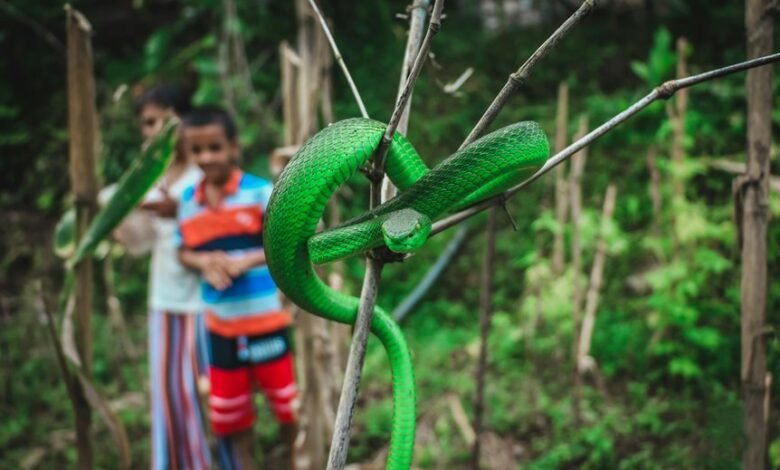
The inland taipan, recognized as the world’s most dangerous snake, exemplifies a lethal combination of potent venom and aggressive behavior. Its striking coloration serves as both a warning and a tool for camouflage. Understanding its complex hunting strategies reveals its role as an apex predator. However, encounters with this species can have dire consequences for humans. The implications of its existence extend beyond mere danger, prompting a need for further exploration into its behavioral patterns and ecological significance.
Characteristics of the Most Dangerous Snake
Although the term “most dangerous snake” can vary depending on the criteria used, certain species consistently emerge as the most lethal due to their potent venom, aggressive behavior, and wide distribution.
Key characteristics include exceptional venom potency, which can induce paralysis or death, and distinct physical traits such as vibrant coloration or large size, which often signal danger to potential predators and humans alike.
Behavioral Patterns and Hunting Techniques
Many of the most dangerous snakes exhibit complex behavioral patterns and sophisticated hunting techniques that contribute to their effectiveness as predators.
These species employ various hunting strategies, such as ambush and active foraging, tailored to their environments.
Additionally, their social behavior, often solitary, enhances their ability to stealthily navigate their surroundings, ensuring successful prey capture while minimizing detection by potential threats.
Ecological Impact and Role in Nature
Understanding the ecological impact and role of the most dangerous snakes reveals their vital contributions to maintaining the balance within their ecosystems.
As apex predators, they regulate prey populations, preventing overgrazing and promoting biodiversity. Their predatory behavior influences the distribution and abundance of species, thereby ensuring ecosystem balance.
This intricate predator-prey dynamic underscores the importance of these snakes in sustaining healthy environments.
Human Encounters and Safety Measures
While encounters between humans and the most dangerous snakes can lead to serious consequences, understanding how to minimize risks is crucial for safety.
Effective snakebite prevention strategies involve education on habitat awareness and appropriate footwear.
In the event of a snakebite, a swift emergency response, including immobilization and seeking medical attention, significantly increases survival chances and reduces long-term complications associated with venomous bites.
Conclusion
In conclusion, the inland taipan, with its dazzling colors and venomous prowess, epitomizes nature’s idea of a dramatic villain. While it may seem to relish its role as the ultimate predator, one can only admire its commitment to keeping humans at bay—an evolutionary strategy that surely earns it a spot on the “Most Unfriendly Species” list. Thus, as we tiptoe through its domain, it’s best to remember that curiosity may just be the quickest path to a very uninviting finale.